Overview
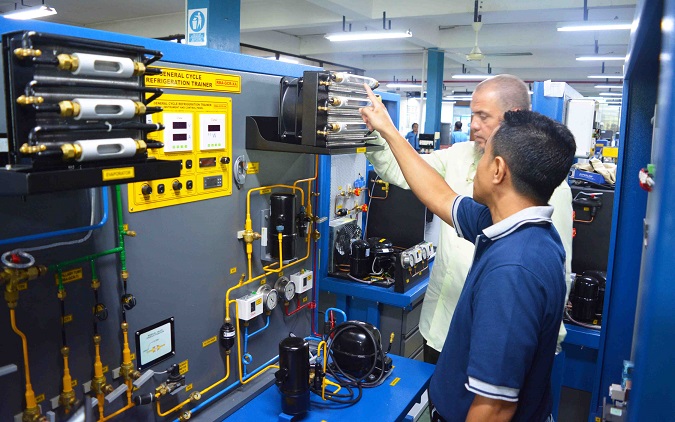
Air conditioning & refrigeration (HVAC) systems are vital in ensuring the comfort of people at home and in the workplace, and refrigeration systems are essential to the storage and preservation of our food resources. We are especially finding a massive acceptance of these systems in developing nations where they have not been widely used before. This increases the importance of having qualified technicians who can install, service and repair this equipment.
Air conditioning & refrigeration (HVAC) systems have recently been undergoing a revolution in technology. Today’s systems are using new technology after the discovery that CFC refrigerants, such as R11 & R12, were harmful to the environment. There is an urgent need to train technicians for this new technology and to improve the servicing and recovery of CFCs on older systems.
Air Conditioning Technicians
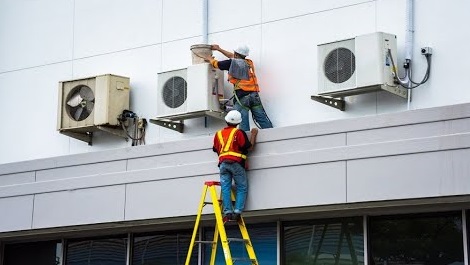
Often called HVAC (Heating, Ventilation, and Air Conditioning) technicians, these professionals handle everything from large central air units to small ductless mini-splits. They check refrigerant levels, clean dusty evaporator filters, and ensure the electrical components are firing safely.
Appliance Repair Technicians
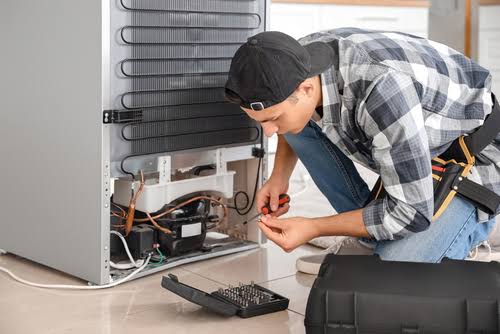
These specialists focus on household appliances like refrigerators. Because a fridge runs 24/7, components like the compressor start capacitor or the defrost thermostat can wear out over time. Technicians are trained to safely handle the delicate copper lines at the base of the machine without puncturing them.
Types of ACs and Refrigerators
While all these units use the same basic physics, their designs vary wildly depending on where they are installed and what they are cooling.
Air Conditioning Systems
Central Air Systems: These use a giant outdoor condenser and an indoor evaporator connected to the home’s furnace. Air is pushed through a network of ducts to cool the entire building evenly.
Ductless Mini-Splits: Perfect for homes without ductwork. An outdoor unit connects to one or more sleek, wall-mounted indoor units. They are incredibly quiet and allow you to cool individual rooms independently.
Window and Portable Units: All four components (compressor, condenser, evaporator, expansion valve) are packed into a single box. They dump the heat out the window while blowing cold air inside.
Refrigerator Systems
Top/Bottom Freezers: The standard residential setup. Cold air is usually generated in the freezer section and a small fan pushes a controlled amount of that cold air down into the fresh food compartment.
Side-by-Side and French Door: These feature more complex airflow configurations and often include dual evaporators one for the freezer and one for the fridge to keep the fridge humid (better for veggies) and the freezer dry (prevents freezer burn).
Commercial Walk-Ins: Found in restaurants and warehouses. These operate much more like an air conditioner, using massive, heavy-duty compressors located outside or on the roof of the building to cool an entire room.
Energy Efficiency Ratios
Modern cooling units are incredibly advanced compared to those built a few decades ago, largely due to smart electronics and better refrigerants. Efficiency is measured using specific terms:
SEER (Seasonal Energy Efficiency Ratio): Used for air conditioners. It measures how much cooling a system puts out compared to the electricity it uses over an entire cooling season.
Inverter Technology: Older ACs and fridges turned the compressor completely "ON" or completely "OFF," which wasted a lot of energy. Modern units use inverter compressors that slow down or speed up precisely based on the temperature, acting like a dimmer switch rather than an on/off switch.
3. A Day in the Life of a Cooling Technician
The technicians who install and repair these systems are highly skilled tradespeople. Because refrigerants can be harmful to the environment if they leak, these workers must be officially certified (such as the EPA Section 608 certification in the United States) to handle them.
What do they actually do on the job?
Evacuation and Charging: If a system has a leak, the technician must patch the copper tubing, use a vacuum pump to suck out all air and moisture, and then weigh in the exact amount of new refrigerant.
Electrical Diagnostics: A huge portion of HVAC and fridge repair is actually electrical. Technicians use multimeters to check for dead capacitors, faulty relays, burnt-out fan motors, or failing control boards.
Airflow Balancing: For AC technicians, a system won't cool properly if the air isn't moving right. They use specialized tools to measure static pressure in the ducts to ensure the air flows smoothly.
Common Tools of the Trade
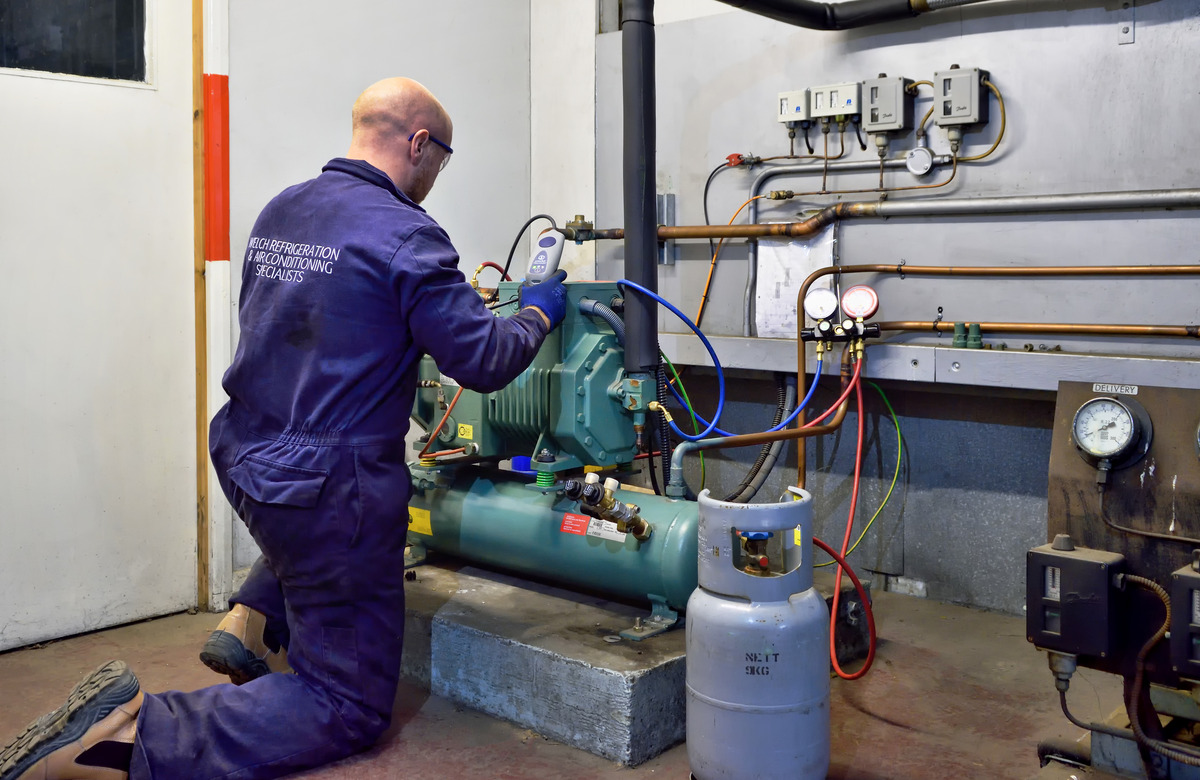
Manifold Gauge Set: The iconic tool of the cooling trade. It features blue (low pressure) and red (high pressure) hoses and gauges that let the worker "see" exactly what the refrigerant is doing inside the sealed lines.
Leak Detectors: Electronic "sniffers" or UV dyes used to find microscopic holes in the coils where refrigerant might be escaping.
4. Troubleshooting: When Things Go Wrong
When these systems fail, the symptoms usually point directly to one of the core components:
The AC/Fridge runs but blows warm air: This usually means the refrigerant has leaked out, or the compressor isn't turning on.
Ice is building up on the coils: This happens when there is a restriction in airflow (like a heavily clogged air filter) or a failure in the refrigerator's automatic defrost heater. The coils get too cold and freeze the moisture right out of the air.
The unit constantly clicks on and off (Short-cycling): This is often an electrical safety issue, an overheating compressor, or a faulty thermostat sensor.